
The IRIM Seminar Series is a bi-weekly event that brings together students, faculty, and research professionals to hear from guest faculty working in cutting edge research. Held in-person, these sessions feature expert speakers discussing a wide range of topics in robotics — from emerging technologies and innovative applications in manufacturing and space exploration to medical and assistive technologies and devices meant for deployment in the home . The series fosters cross-sector dialogue and provides a platform for sharing insights, challenges, and opportunities shaping the future of robotics in our society.
Join our Seminars
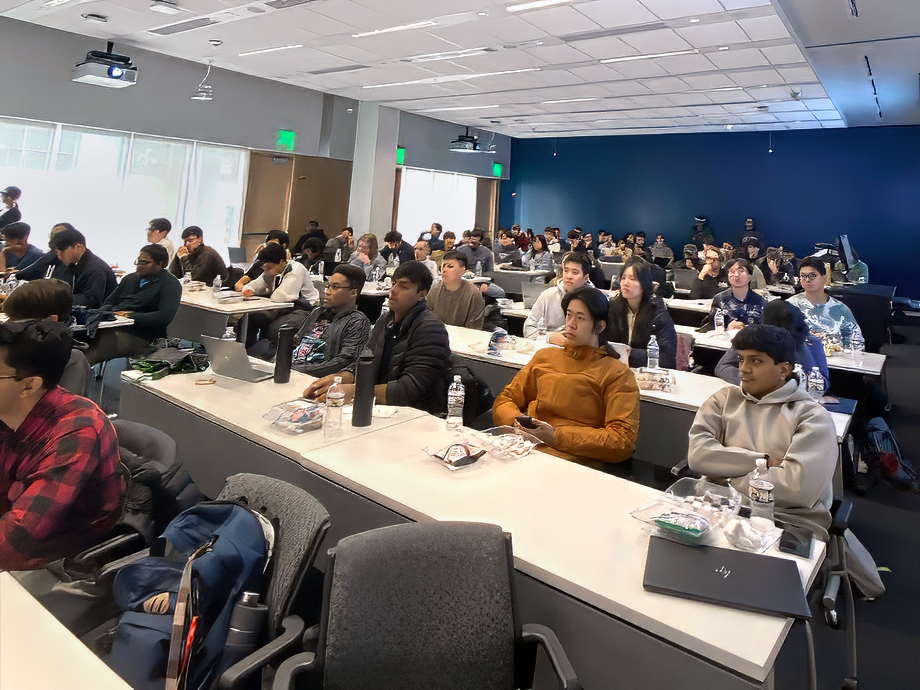
All Seminars Held in Person on Alternate Wednesdays from 12:15 - 1:15pm
The Full Schedule with Links to Session Details are Below.
Upcoming Lectures
Oct. 21 | The Dynamics of Fluid Physical Interaction: Safe, Adaptive, and Compliant Robot Intelligence
Abstract: For decades, we have envisioned robots that can move, adapt, and collaborate with humans as fluidly as we do with each other. Yet even the most advanced systems struggle to achieve what I call fluid physical interaction: a regime where motion, force, and intent predictions are continuously co-regulated through constraint-aware estimation, learning, and control; enabling safe, adaptive, and seamless exchanges of energy and information. Achieving this requires robots that are stable yet flexible, adaptive yet predictable, and compliant yet purposeful. In this talk, I will show how a dynamical-systems perspective provides a unifying foundation for realizing fluid physical interaction. By shaping robot behavior through stable vector fields, viability manifolds, and adaptive dynamics models, we can generate motion policies that remain reactive, safe, and consistent even under uncertainty. I will present recent results that demonstrate how this framework enables robots to generalize complex behaviors from minimal demonstrations, adapt online to changes in their dynamics and environment, avoid obstacles in real time, and maintain long-horizon safety during physical collaboration. I will also discuss new efforts that combine dynamical-systems principles with visuomotor learning to achieve stable, compliant, and force-aware behavior from simulation-guided data. Together, these developments move us closer to embodied, adaptive, and compliant robot intelligence that can truly flow with humans and the environments they inhabit.
Bio: Nadia Figueroa is the Shalini and Rajeev Misra Presidential Assistant Professor of Mechanical Engineering and Applied Mechanics at the University of Pennsylvania, with secondary appointments in Computer and Information Science and Electrical and Systems Engineering. She is a core faculty member of the GRASP Lab. Her research integrates learning, control, and estimation to enable safe, adaptive, and fluid human–robot interaction and collaboration. Her work bridges control theory, machine learning, perception, and biomechanics, with an emphasis on formal guarantees for robot behavior in dynamic, human-centered environments. Before joining Penn, she was a Postdoctoral Associate in MIT’s CSAIL. She earned her Ph.D. in Robotics, Control, and Intelligent Systems from EPFL and conducted research at the German Aerospace Center (DLR) and NYU Abu Dhabi. She holds a B.Sc. in Mechatronics Engineering from Tecnológico de Monterrey and an M.Sc. in Automation and Robotics from TU Dortmund. She received a 2025 NSF CAREER Award and was a finalist for the 2020 Georges Giralt Ph.D. Award and the 2017 KUKA Innovation Award. Her publications have received multiple best paper honors at ICRA, CASE, RSS, and IEEE Transactions on Robotics. She chairs the IEEE RAS Women in Engineering Committee, leading global efforts to recognize and celebrate women in robotics.
Nov. 4, 2026 | 12:15pm - 1:15pm | CODA 9th Floor Atrium
Title: TBA
Abstract: TBA
Bio: Tapomayukh "Tapo" Bhattacharjee is an Assistant Professor in the Department of Computer Science at Cornell University where he directs the EmPRISE Lab (https://emprise.cs.cornell.edu/). He completed his Ph.D. in Robotics from Georgia Institute of Technology and was an NIH Ruth L. Kirschstein NRSA postdoctoral research associate in Computer Science & Engineering at the University of Washington. His primary research interests are in the area of physical robot caregiving and physical human-robot interaction. He is the recipient of TRI Young Faculty Researcher Award'24, NSF CAREER Award'23, AFCEA 40 under 40 Award'22, and his work has won Best Systems Paper Award at HRI’26, Best Paper Award at RSS’25, Best Paper and Student Paper Award Finalist and Best HRI Paper Award Finalist at ICRA’25, Best Systems Paper Award Finalist at HRI'24, Best Demo Award at HRI'24, Best RoboCup Paper Award at IROS’22, Best Paper Award Finalist and ABB Best Student Paper Award Finalist at IROS’22, Best Technical Advances Paper Award at HRI'19, and Best Demonstration Award at NeurIPS’18. His work has also been featured in many media outlets including the BBC, Reuters, New York Times, IEEE Spectrum, and GeekWire and his robot-assisted feeding work was selected to be one of the best interactive designs of 2019 by Fast Company.
Nov. 18, 2026 | 12:15pm - 1:15pm | Klaus1116 E&W
Title: TBA
12:15pm - 1:15pm | Klaus 1116 E&W
Abstract: TBA
Bio: Jeremy D. Brown, the John C. Malone Associate Professor in the Department of Mechanical Engineering, explores the interface between humans and robotics, with a specific focus on medical applications and haptic feedback.
Brown’s research sits at the intersection of engineering, biomechatronics, medicine, perception, and psychophysics, and focuses on the interface between humans and robotics. He develops novel haptic interfaces for upper-limb prostheses, minimally invasive surgical robotics, and rehabilitation robots.
Brown’s team in his Haptics and Medical Robotics (HAMR) lab uses methods from human perception, motor control, neurophysiology, and biomechanics to study the human perception of touch, especially as it relates to applications of human-robot interaction and collaboration. Elements of HAMR’s research could lead to breakthroughs in additional fields, including rehabilitation robotics.
Oct. 7 | Advancing Robotic Assembly in Construction through Learning and Adaptive Control
Abstract: Robotic assembly in construction offers opportunities to alleviate labor shortages, reduce workers’ exposure to physically demanding tasks, and expand the possibilities for novel architecture. However, reliable robotic assembly in construction remains challenging due to uncertainties associated with variability in component geometry and material properties; tolerance accumulation during fabrication and assembly; discrepancies between as-designed and as-built states; incomplete observations resulting from limited sensing coverage of large components, occlusion, and clutter; and unmodeled contact dynamics. These challenges are particularly pronounced in contact-rich robotic assembly at construction scale, where small geometric deviations or pose estimation errors can prevent insertion, generate excessive contact forces, or damage component.
To address these challenges, this lecture presents a framework for contact-rich robotic assembly in construction that integrates perception, planning, and control. Within this framework, three complementary approaches are examined: adaptive control to compensate for model mismatch and disturbances; learned sensorimotor policies to handle complex, tight-tolerance interactions for which effective control strategies are difficult to formulate analytically; and a hybrid approach that combines learned policies with adaptive control to improve robustness and enable zero-shot sim-to-real transfer without real-world demonstrations for policy training. Through construction-scale case studies, the lecture highlights key methods, experimental findings, and current limitations of these approaches. It concludes by discussing open challenges and future directions for generalizing across material systems and component geometries, transferring skills between tasks, and extending these methods to longer assembly sequences in construction.
Bio: : Dr. Arash Adel is an Assistant Professor at the School of Architecture, a Core Faculty of Princeton Robotics, and an Associated Faculty of the Department of Computer Science at Princeton University. He is the founder and director of Adel Research Group (ARG). ARG conducts interdisciplinary research at the intersection of robotics, artificial intelligence, and computational design; the research contributes to resilient, sustainable, and low-carbon construction outlooks and achievements. At the core of ARG’s comprehensive research is investigating human–robot collaborative processes, which tackle fundamental questions related to the future of the design and construction industries and their potential to have a broader impact on inclusive and equitable building culture. Prior to joining Princeton University in 2023, Adel was an Assistant Professor of Architecture at the University of Michigan’s Taubman College of Architecture and Urban Planning. Adel received his Doctorate in Architecture from the Swiss Federal Institute of Technology (ETH) and his Master’s in Architecture from Harvard University.
Sep. 23 | Information, Coordination, and Incentives: A Dynamical Twist | Sarah Li - Assistant Professor, Guggenheim School of Aerospace Engineering
Abstract: Autonomous systems increasingly operate alongside other strategic agents whose choices determine how well they perform. This talk presents game-theoretic tools for designing and analyzing such interactions, focusing on how information, coordination, and incentives shape outcomes in the presence of dynamics. I will first discuss dynamic Stackelberg games, in which a leader must act while updating its estimate of a strategic follower's intent in real time. By folding online estimates of the follower's objective into the leader's decision process, this framework captures the coupling between inference and control, and reveals that, unlike in optimal control, our standard notion of optimality is not consistent over time. I then turn to settings where independent decision-making is insufficient for achieving desirable outcomes, and show how correlated strategies offer a richer coordination mechanism, although it still needs to be reconciled with dynamical constraints. Finally, I discuss auction-based mechanisms for dynamical systems, where agents compete for limited resources under network constraints on their demands and actions.
Bio: Sarah H. Q. Li is an assistant professor in the School of Aerospace Engineering at the Georgia Institute of Technology, where she leads the Control, Coordination, and Competition under Uncertainty (C3U) Lab. She received her Ph.D. in aeronautics and astronautics at the University of Washington, and completed her postdoc with the Autonomous Control Lab at ETH Zurich. Her work combines optimal control, stochastic decision processes, and game theory to study how autonomous agents can coordinate safely and efficiently in uncertain environments.
Past Lectures
Sep. 9 | Rethinking the Promise of Robotic Exoskeletons After Spinal Cord Injury: Are We Asking the Right Questions?
Abstract: Since their initial introduction in the early 2000’s, there has been significant progress in the capabilities of robotic exoskeleton technologies. While they initially generated considerable enthusiasm as a rehabilitation therapy for restoring walking after spinal cord injury (SCI), evidence indicates their value for this purpose is limited. However there are other needs of the SCI population for which exoskeletons hold great promise. In this talk we will review evidence from research evaluating robotic exoskeletons as interventions to improve walking function after SCI, focusing on whether walking gains achieved in the device translate to meaningful improvements in walking outside the device. To analyze the limited translation from exoskeleton training to real-world walking we will examine how exoskeleton training differs from locomotor training. However, focusing solely on walking recovery may underestimate the broader potential of these technologies. The most compelling future role for robotic exoskeletons is as mobility technologies that provide meaningful access to upright movement and community mobility for individuals who cannot otherwise walk independently. Achieving this vision will require substantial advances in device design, usability, adaptability, safety, and integration with the real-world environments in which people with SCI live and move.
Bio: Edelle (Edee) Field-Fote, PT, PhD, FAPTA, FASIA holds the positions of Director, Shepherd Center Spinal Cord Injury (SCI) Research Program & Hulse Laboratory; Professor, Emory University School of Medicine, Department of Rehabilitation Medicine; and Professor of the Practice, Georgia Institute of Technology, School of Biological Sciences. With a clinical background as a physical therapist, PhD training in a pre-clinical model of SCI, and post-doctoral training in neurophysiology, Dr. Field-Fote’s 25+ years of SCI research has spanned the breadth from basic/pre-clinical to clinical/translational research related to SCI. She leads a research team dedicated to improving motor function in persons with SCI through the development of clinically accessible neuromodulation and neurorehabilitation approaches informed by the latest neuroscience research and guided by outcomes that have meaning for persons with SCI. Dr. Field-Fote has conducted randomized clinical trials with continuous funding from the NIH since 1997, with other trials in her lab funded by the Department of Defense, the National Institute on Independent Living Disability and Rehabilitation Research, and numerous foundations. She currently serves as Chair of the Spinal Cord Injury Model Systems Project Directors consortium, as lead-PI of the NIH R25-funded program Training in Grantsmanship in Rehabilitation Research, and as Chair of the Paralyzed Veterans of America Clinical Practice Guideline Development Panel for the guidelines Outcomes After Spinal Cord Injury. Dr. Field-Fote is a past Chair of the NIH National Advisory Board on Medical Rehabilitation Research, past President of the Foundation for Physical Therapy Research, and the 54th McMillan Lecture Award honoree of the American Physical Therapy Association.
Aug. 26 | What Does Safety Mean for Generalist Robots?
Abstract: Robot safety is a nuanced concept. We commonly equate safety with collision-avoidance. However, when considering the possibility of generalist robots -- one robot that can do "anything" -- we need to expand our notion of safety. For example, a manipulator should understand when it is not confident about a requested task, that objects should be gently manipulated to prevent breaking or spilling, and that overheating items can cause burning or melting. However, designing robots that have such a nuanced safety understanding (and that can reliably generate appropriate actions) is an outstanding challenge. In this talk, I will describe my group's work on systematically uniting modern machine learning models (such as large vision-language models and latent world models) with classical formulations of safety in the control literature to generalize safe robot decision-making to increasingly open world interactions. Throughout the talk, I will present experimental instantiations of these ideas in domains like vision-based robotic manipulation.
Bio: Andrea Bajcsy is an Assistant Professor in the Robotics Institute at Carnegie Mellon University where she leads the Interactive and Trustworthy Robotics Lab (Intent Lab). She broadly works at the intersection of robotics, machine learning, control theory, and human-AI interaction. Prior to joining CMU, Andrea received her Ph.D. in Electrical Engineering & Computer Science from University of California, Berkeley in 2022. She is the recipient of the DARPA Young Faculty Award (2025), NSF CAREER Award (2025), Amazon Research Award (2025), Google Research Scholar Award (2024), Finalist for Best Paper Award of the IEEE RAS Technical Committee on Robot Control (2024), Rising Stars in EECS Award (2021), Honorable Mention for the T-RO Best Paper Award (2020), NSF Graduate Research Fellowship (2016), and worked at NVIDIA Research for Autonomous Driving.
April 15, 2026 | Predicting and Shaping User-device Interactions in Neural Interfaces
Abstract: Neural interface technologies provide new opportunities to assist and augment human behaviors. For instance, muscle activity can be transformed into commands for an assistive device for people with disabilities or provide richer control for a computer than interfaces like mice and keyboards. Connecting signals from the nervous system to an external device in this way presents users with a new, potentially unintuitive, mapping between their movements and those of the device. Users often change their behavior as they learn to control neural interfaces, and many neural interfaces leverage machine learning to let the device adapt to the users. This co-learning creates complex and high-throughput interactions between algorithms and the nervous system. In my talk, I’ll present recent research in my lab demonstrating that the algorithms we use in neural interfaces influence neural computations and user learning. I will then present new computational frameworks we’ve developed to predict and shape user-algorithm interactions. These discoveries open possibilities to build neural interfaces that intelligently interact with the nervous system to assist and rehabilitate motor function across diverse users and applications.
Bio: Dr. Orsborn is a Cherng Jia and Elizabeth Yun Hwang Associate Professor in the departments of Electrical & Computer Engineering and Bioengineering at the University of Washington. Her research explores sensorimotor plasticity in brain-computer interfaces and how plasticity is influenced by the algorithms used. She completed her Ph.D. at the UC Berkeley/UCSF Joint Graduate Program in Bioengineering and her postdoctoral training at NYU’s Center for Neural Science. She recently received the NSF CAREER award, a Sloan Fellowship, and was named an Emerging Leader by the American Institute of Medical and Biological Engineering.
April 1, 2026 | Scaling Down Robotics
Abstract: The ability to manufacture microscale sensors and other components for robotic systems has intrigued the robotics community for almost 40 years. There have been huge success stories; MEMS inertial sensors have enabled an entire market of low-cost, small-scale UAVs. However, the promise of ant-scale robots has largely failed. Ants and other small insects like mites can move at high speeds on surfaces from picnic tables to front lawns, but few small-scale robots have moved outside the lab. This talk will present themes across our work in scaling down robotics. A common thread across our work is the use of geometry, materials, and mechanisms to do part of the robot control and computation in hardware. For example, choosing the right foot geometry and size scale can result in a 3.6 cm high power autonomous biped capable of high speed locomotion at 25 cm/s. Novel fabrication processes can be designed to tightly couple high-bandwidth actuators, sensors, and mechanisms for locomotion and manipulation tasks. Finally, even sensors can be designed to quickly and easily detect flight-relevant events.
Bio: Sarah Bergbreiter joined the Department of Mechanical Engineering at Carnegie Mellon University as a Professor in the fall of 2018 after spending ten years at the University of Maryland, College Park. She started her academic career with a B.S.E. degree in electrical engineering from Princeton University in 1999. After a short introduction to the challenges of sensor networks at a small startup company, she received her M.S. and Ph.D. degrees from the University of California, Berkeley in 2004 and 2007 with a focus on small-scale robots. Prof. Bergbreiter received the DARPA Young Faculty Award in 2008, the NSF CAREER Award in 2011, and the Presidential Early Career Award for Scientists and Engineers (PECASE) in 2013 for her research on engineering robotic systems down to millimeter size scales. She has received several Best Paper awards at conferences like ICRA, IROS, and Hilton Head Workshop with her fabulous group of students and former students, and is a Fellow of the ASME. She also served as Vice Chair of DARPA’s Microsystems Exploratory Council from 2020 through 2022. Outside of academia, she enjoys spending time with her husband and two daughters, running, biking, or skiing outside rather slowly, and the rare game of water polo.
March 11, 2026 | An Overview of IHMC's Work into the Design of Hardware and Autonomy for Humanoid Robots
Abstract: The last five years have seen the transition of the perception of humanoid robots as almost exclusively a research platform to a viable commercial platform. The believed wide applicability of these platforms stems from their huge potential capabilities. With form factors inspired by humans, the hope is that these robots may one day be as capable as their biological counterparts. One of their areas of greatest potential impact are in highly uncertain, highly variable settings like disaster response. However, what goes into making this possible?
This talk will be broken into two parts. First, we will talk about the hardware design of humanoid robots, in particular the design of IHMC's custom humanoids, Nadia and Alex. These systems are highly articulated and thus highly complex, with many degrees of freedom and many subsystems. Beyond complexity, however, enabling them to move through environments dynamically and efficiently requires careful consideration of not only their actuator design but also the passive dynamics. Then, we will talk about IHMC's work in the design of autonomy and human interfaces to enable humans to team with humanoid robots to explore and work in novel environments. This will overview the approach for one of the earliest uses of virtual reality to control humanoid robots. We will also highlight IHMC's design of a flexible autonomy architecture built on behavior trees that enables on-the-fly drafting of novel behaviors and reliable reactivity, including the inclusion of human intervention when encountered with uncertainty.
Bio: Dr. Robert Griffin is a Senior Research Scientist at IHMC and Director of Research Professor at the University of West Florida. His research focuses on improving mobility and autonomy for legged robotics and powered exoskeletons. He is interested in system level approaches for improving the mobility and capability of these robotic platforms, including platform design, motion design and control, autonomy and manipulation, and perception.
Dr. Griffin leads the robotics group at IHMC, directing a number of projects focusing on advancing robotics. This has included the Office of Naval Research's SquadBot program, which has led to the development of the Alex and Nadia humanoid robots. He has also led the algorithm development for NASA Johnson Space Center's Valkyrie project, including using Valkyrie as an Explosive Ordnance Disposal Technician. Dr. Griffin has also guided the development of a number of exoskeleton systems, including devices used for regaining mobility as well as worker assistance for the Department of Energy. The research in these projects has included the development of novel simplified models for locomotion, contact planning, environmental modeling, the development of autonomy algorithms, and hardware design. His work has resulted in a number of recognitions, including several best paper awards, qualifying as a finalist in the Toyota Mobility Foundation's Mobility Unlimited Challenge, a 2nd and 4th place finish in the Cybathlon Powered Exoskeleton race, and being named as the Outstanding Research Organization in the 2025 Humanoid Robotics Industry Awards.
Feb. 25, 2026 | Material-Like Robotic Collectives with Spatiotemporal Control of Strength and Shape
Abstract: The vision of robotic materials—cohesive collectives of robotic units that can arrange into virtually any form with any physical properties—has long intrigued both science and fiction. Yet this vision requires a fundamental physical challenge to be overcome: The collective must be strong, to support loads, yet flow, to take new forms.
In this talk, I will describe how we achieve this in a material-like robotic collective by modulating the interunit tangential forces to control topological rearrangements of units within a tightly packed structure. This allows local control of rigidity transitions between solid and fluid-like states in the collective and enables spatiotemporal control of shape and strength. I will show examples of structure-forming and healing and how the collective can support 700 newtons (500 times the weight of a robot) before“melting” under its own weight.
Bio: Elliot W. Hawkes is an Associate Professor of Mechanical Engineering at UCSB. He completed a postdoctoral fellowship at Stanford University, where he also earned his MS and PhD in Mechanical Engineering. Previously, he worked at the Harvard Microrobotics Lab and the ETH Multi-scale Robotics Lab. The Hawkes Lab's research is at the intersection of design, mechanics, and materials, and develops novel mechanisms and applies non-traditional materials to solve challenging problems in robotics, medicine, and biomechanics. He has spun two companies out of the Hawkes Lab, to bring new medical and rehabilitation devices into the world.
Feb 11, 2026 | Behavioural Production: Semi-Autonomous Design, Fabrication and Construction
Abstract: This lecture presents a research vision for Behavioral Production, an emerging paradigm at the intersection of design, engineering, and autonomous systems. In response to housing insecurity, labor shortages, and the environmental impacts of conventional construction, the work reframes building production as a responsive, adaptive, and materially intelligent process grounded in semi-autonomous fabrication, multi-agent coordination strategies, robotic platforms and tools, and generative computational design. Drawing on aerial and ground-based collective robotic construction and multi-agent design strategies informed by deep learning, the lecture outlines pathways toward scalable and affordable building systems that address urgent societal needs.
Bio: Robert Stuart-Smith is Founding Director of the Master of Science in Design: Robotics and Autonomous Systems (MSD-RAS) program, Assistant Professor of Architecture, and an affiliate faculty member in the Engineering School’s GRASP Laboratory at the University of Pennsylvania (Penn). He is also a Principal Research Associate in University College London’s (UCL) Department of Computer Science. Stuart-Smith leads the Autonomous Manufacturing Lab across Penn and UCL, where he has secured over $6.9M in competitive research funding and collaborates with industry partners including Cemex, Skanska, Mace, Buro Happold, Arup, and the Manufacturing Technology Centre (MTC). Stuart-Smith’s research focuses on robotics-enabled fabrication and construction systems, adaptive multi-robot processes, and integrated AI-driven generative design workflows. His Aerial Additive Manufacturing research —published in Nature—introduced in-flight additive manufacturing using coordinated aerial robotic agents. Stuart-Smith’s work has also been published in Science Robotics, AD Architectural Design, and L’Architecture d’Aujourd’hui, and featured by outlets including BBC Click, New Scientist, Smithsonian, and Architizer.
Jan. 28, 2026 | From the Deep Sea to Deep Space: A 25-Year Robotic Journey Across Worlds
Abstract: Over the past twenty-five years, my research journey has traversed the full spectrum of robotics, from the depths of the ocean to the surface of Mars, and from autonomous machines to human-centered systems. This talk will reflect on a career dedicated to advancing robotics across vastly different environments, unified by one central theme: understanding and controlling complex, uncertain, and dynamic systems.
Beginning with underwater vehicles and distributed control for multi-agent coordination, the talk will trace the evolution of my work through ground and aerial robotics, where nonlinear and robust control methods were developed to enable agility, adaptability, and resilience. The discussion will then move into human-centered robotics, including humanoid platforms, rehabilitation robotics, and powered exoskeletons designed to restore or augment human movement. These efforts have increasingly blurred the boundaries between machine and human, culminating in recent work on physical human-machine interaction and assistive technologies that embody both engineering rigor and social impact.
Drawing from experiences in academia, government, and interdisciplinary collaboration, the presentation will offer an integrated perspective on how robotic systems can enhance human capability, extend our reach into extreme environments, and inspire the next generation of engineers and explorers.
Bio: Dr. Alexander Leonessa is the Chair of the Department of Mechanical Engineering at Clemson University, where he also holds the D.W. Reynolds Distinguished Professorship. His career spans more than twenty-five years of research, teaching, and leadership in robotics, control systems, and human–machine interaction.
Before joining Clemson, Dr. Leonessa served as a Program Director at the National Science Foundation, where he led the Mind, Machine, Motor Nexus (M3X) program and oversaw the Foundational Research in Robotics (FRR) and the Dynamic, Control and Systems Diagnostics (DCSD) programs. In that role, he managed a research portfolio of approximately $10 million, advancing national efforts in robotics, assistive technologies, and neuroengineering.
Jan. 14, 2026 | Beyond Scaling: Exploration, Guidance, and Symmetry in Robot Perception
Abstract: Recent generalist robot systems rely on vision-language-action models without making any use of perception capabilities like 3D or 4D representations encoded in vision foundation models. They increasingly rely on scaling up the number of examples needed for behavior cloning not only to capture the distribution of tasks but also basic perceptual skills. We argue that a robot should be an active observer that selects the best views required for scene representation and the affordances involved in the task at hand. Such an exploration can rely on information-theoretic principles that guide the robot towards unpredictable views. Moreover, test-time geometric reasoning can adapt to arbitrary environments enabling collision-free planning and one-shot adaptation. Last, symmetry enables better generalization and learning dynamics. We propose an equivariant canonicalization framework with applications in trajectory planning and odometry.
Bio: Kostas’ research interests are in computer vision and robotic perception. His research addresses challenges in the perception of motion and space, such as the geometric design of cameras, and the interplay of geometry and appearance in perception tasks. Kostas’s research gives solutions to perceptual tasks such as panoramic vision, localization, perception of self-motion, large-scale mapping, visual location recognition, 3-D object recognition, and vision-based flocking. Applications of his research involve robot navigation, tele-immersion, and image and shape retrieval.
Seminar Archives on Smartech
IRIM’s seminar series is video recorded and housed in Georgia Tech Library’s SMARTech repository.