
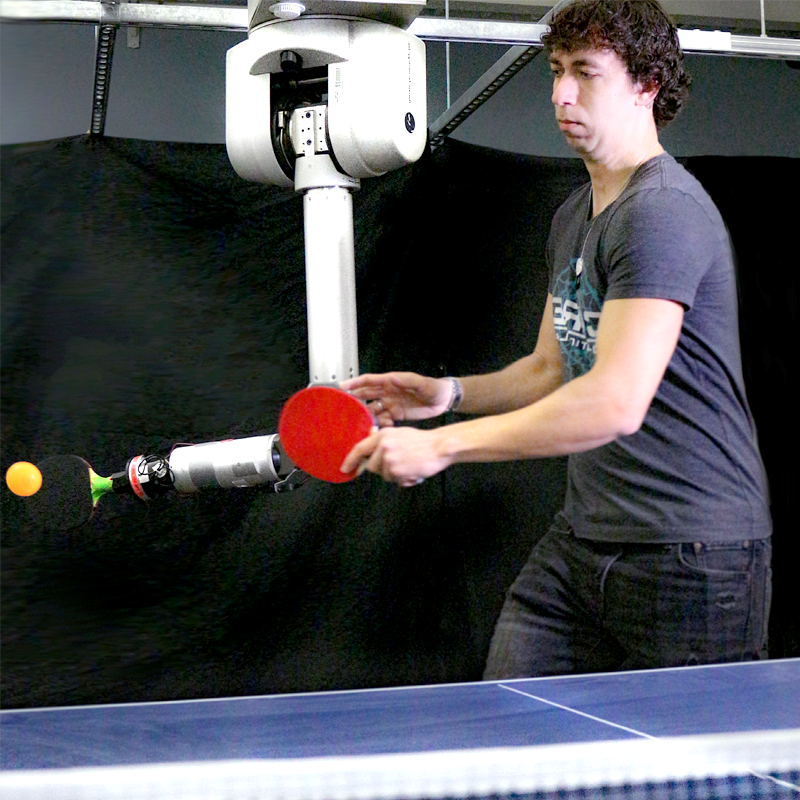
Collaborative Robots
Collaborative robotics focuses on developing intelligent and adaptive robotic systems that can safely and intuitively collaborate with other machines, their environments, and human partners. This field is essential for enhancing productivity, safety, and efficiency as robots become increasingly integrated into industrial, service, and everyday settings.
At Georgia Tech, IRIM researchers advance the science and engineering of interaction, physical collaboration, and learning-enabled autonomy to create the next generation of intelligent, human-aware robotic teams.
Collaborative robotics is an interdisciplinary research area at the intersection of robotics, human factors, control, and artificial intelligence. It focuses on enabling robots to work safely and effectively alongside humans in dynamic and uncertain environments—whether on factory floors, in hospitals, or in daily living spaces. Unlike traditional industrial robots that operate in isolation, collaborative robots (cobots) are designed for direct physical and cognitive interaction with people.
This research is crucial as automation moves beyond isolated tasks toward integrated human-machine partnerships. Collaborative robots enhance productivity, reduce workplace injuries, and extend human capability in environments ranging from manufacturing and logistics to assistive and medical applications. By combining human adaptability with robotic precision, these systems promise to transform industries and improve quality of life.
IRIM researchers at Georgia Tech are pioneering new approaches to human-robot collaboration by integrating biomechanics, perception, learning, and control. Our work spans the development of shared autonomy frameworks, adaptive physical interaction control, intent recognition, and formal safety assurance for collaborative systems. Faculty across mechanical engineering, electrical and computer engineering, aerospace engineering, interactive computing, and biomedical engineering collaborate to push the frontiers of safe, intelligent, and socially aware robots. Georgia Tech’s unique interdisciplinary ecosystem—spanning the Institute for Robotics and Intelligent Machines, the Manufacturing Institute, and the Emory-Georgia Tech biomedical community—positions us as a leader in developing the next generation of human-centered robotic technologies. -world testing, our innovations are bringing robots closer to integration into everyday life.
Collaborative Robotics Foundations
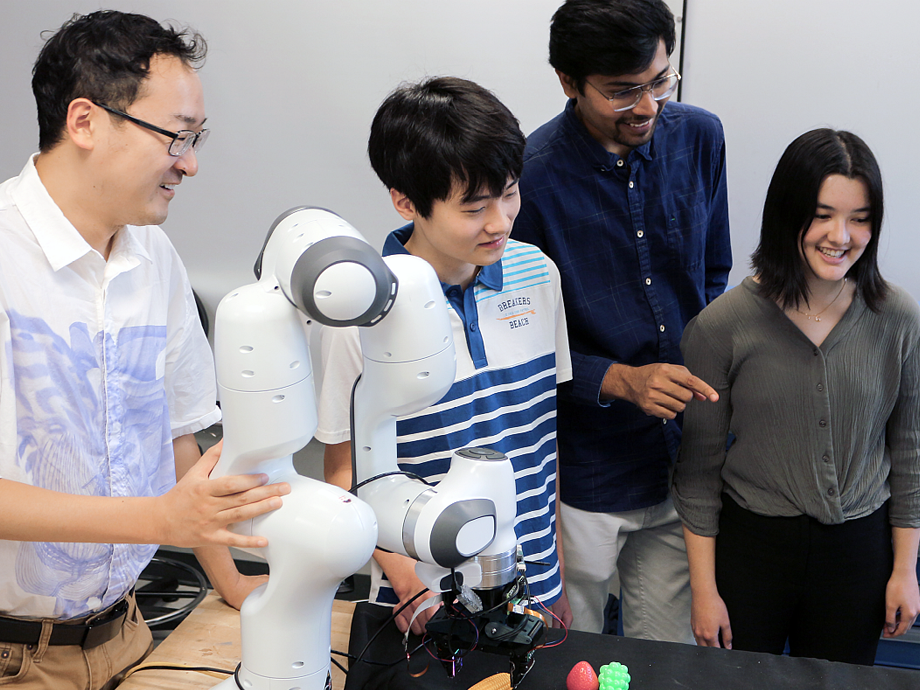
Adaptive & Cooperative
Cooperative robots are designed to work safely alongside humans in shared spaces, handling repetitive tasks while people focus on more complex work. Their accuracy, uptime, and repeatability complement human problem-solving. Adaptive robots combine computer vision, force control, and advanced control to operate in dynamic, unstructured environments. Computer vision enables real-time perception—recognizing objects, understanding surroundings, and handling variation while force control lets robots sense and respond to physical interactions, adjusting motion based on contact forces. Unlike traditional industrial robots, they prioritize safety and employ technologies that prevent collisions or trigger shutdowns on unexpected contact.
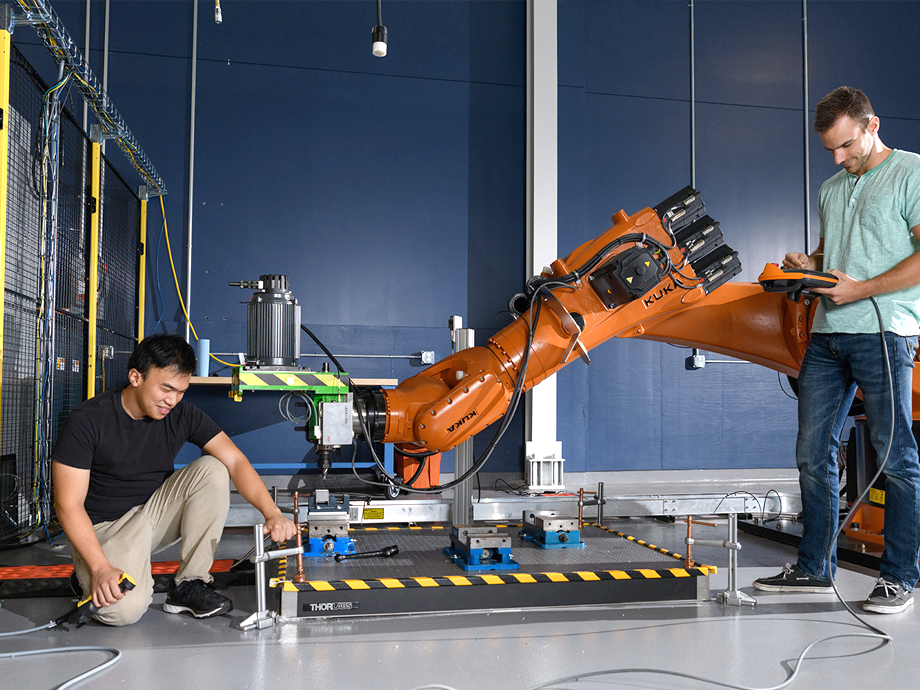
Manufacturing & Supply Chain
Research into manufacturing and supply chain applications of robotics seeks to integrate robotics technologies across systems to increase production, quality and safety. By integrating cross-disciplinary expertise, physical sensors, AI & ML training regimes, materials science, human–machine modeling, and quality assurance processes, Georgia Tech researchers are working to build a robust a manufacturing innovation ecosystem.
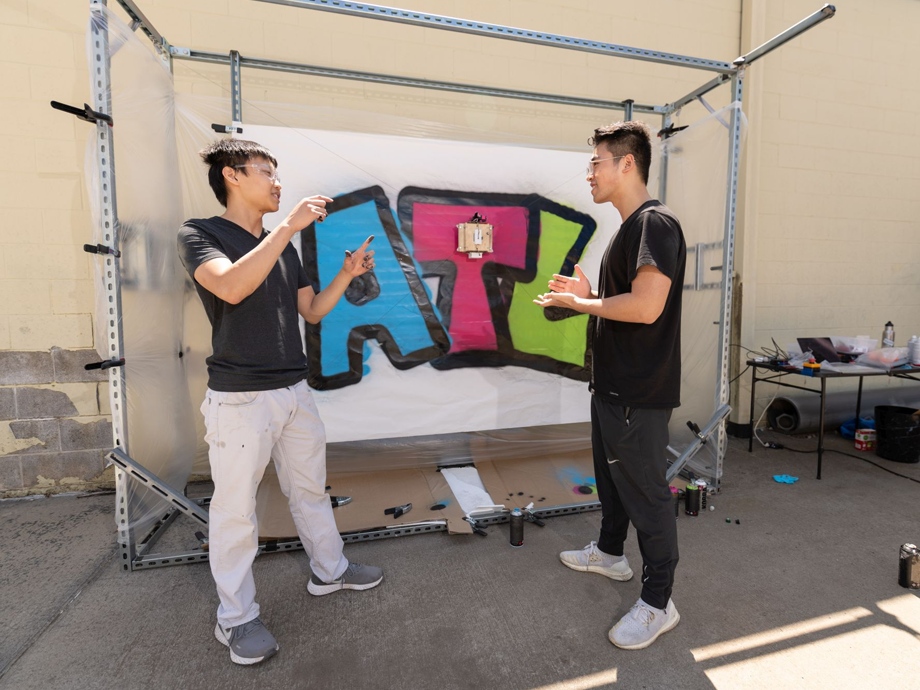
Artistic & Creative Collaboration
Art has always thrived on experimentation, and collaborative robots (cobots) are now shaping new creative frontiers. By combining robotic precision with human expression, cobots are evolving from industrial tools into active partners in performance, enabling innovative works that blur the boundaries between art and technology.
Learn More
Contact for Collaborative Robotics | Ye Zhao - Associate Professor & Woodruff Faculty Fellow; School of Mechanical Engineering | Phone - 404.894.3061 | Office - GTMI 437